Truth Requires Conditions: Reflections on Journalism, Safety, and Solidarity from Timor-Leste
Through the Sander Thoenes Programme, Antónia Kastono Martins reflects on truth, safety, and how practical training is shaping more resilient journalism.
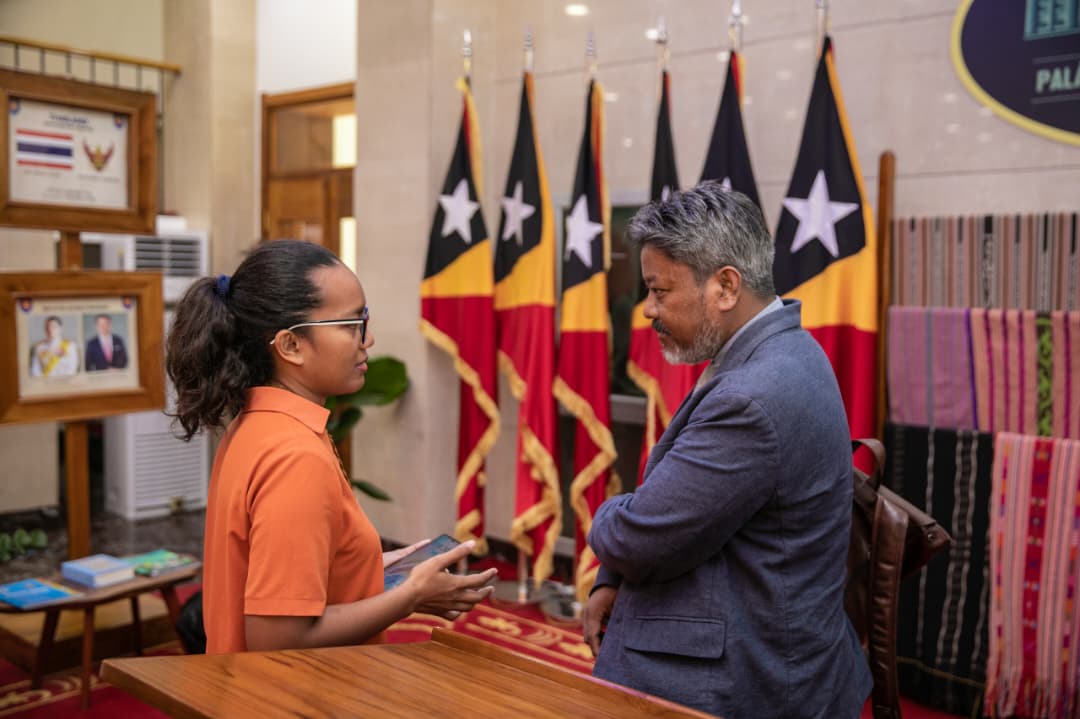
As one of the world's youngest democracies, journalism in Timor-Leste carries a particular weight. It is not only about reporting events, but also about shaping how a young country understands itself.
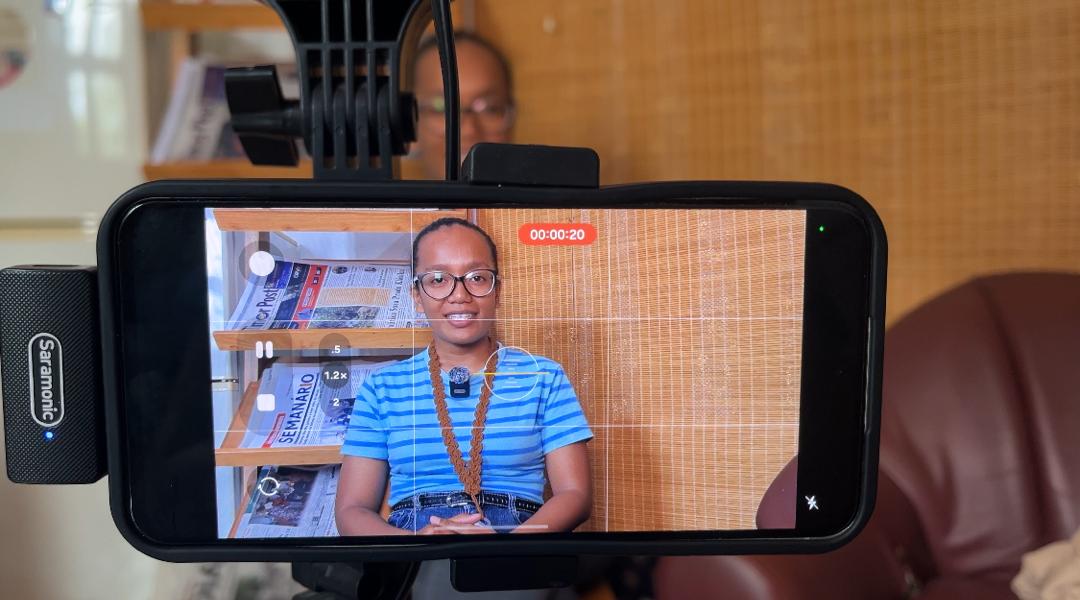
For Antónia Kastono Martins, Director and journalist at Diligente, this responsibility is central to her work. At the independent digital media outlet she co-founded in 2023, her reporting focuses on investigative and public interest journalism, often centered on issues of governance, justice, and social vulnerability.
I am particularly passionate about reporting on social issues, the environment, governance, justice, and accountability, as well as stories that highlight underrepresented communities. Through my work, I strive to make complex issues more accessible and to ensure that citizens are informed and empowered to engage in democratic processes.
One of her investigations, examining the exploitation of a child with psychosocial difficulties, received national recognition from the Press Council of Timor-Leste. Beyond the awards, the story highlighted how systemic gaps can leave vulnerable individuals exposed, underscoring the role of journalism in bringing such realities into public view and discourse.
Learning What Was Previously Out of Reach
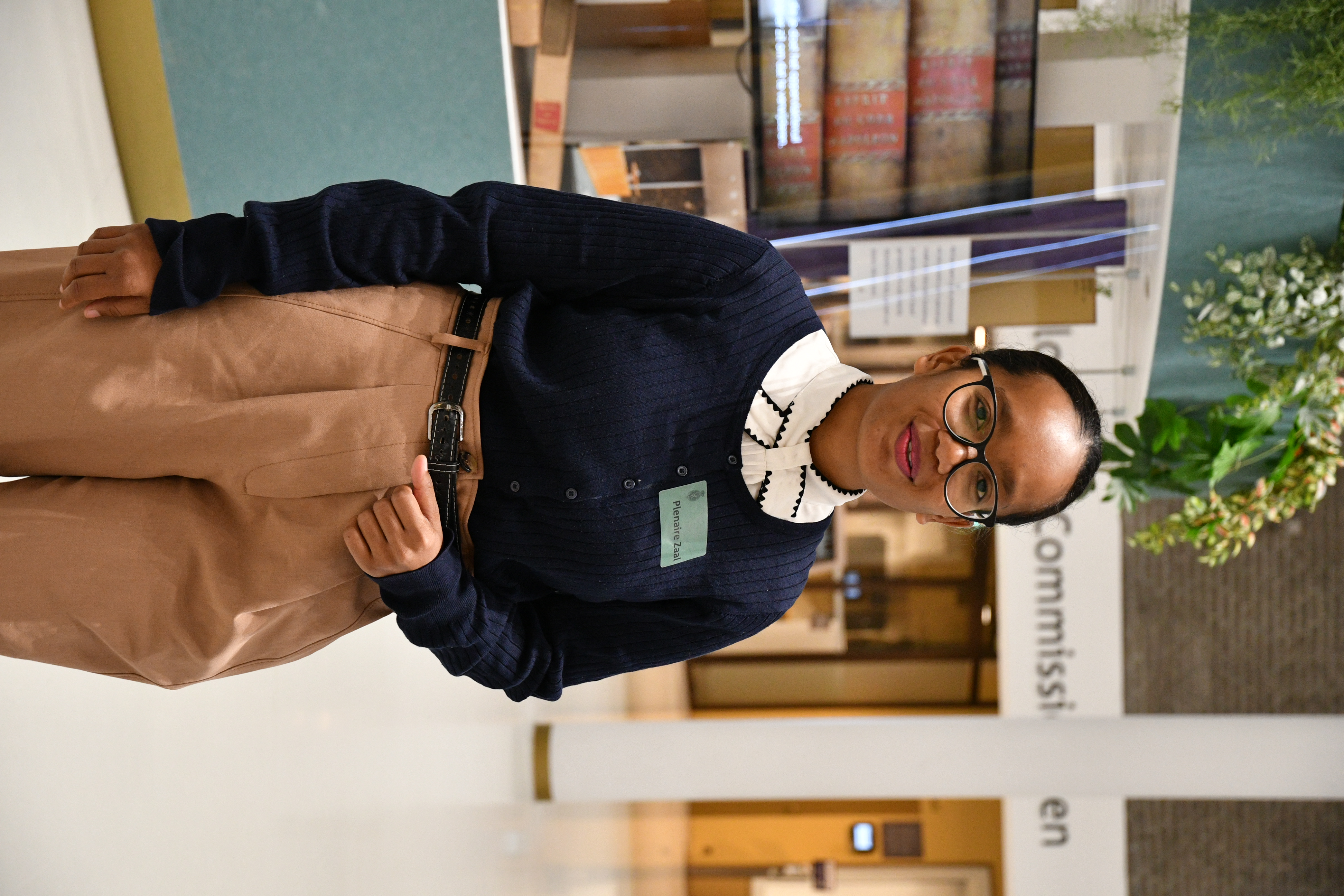
In February 2026, Antónia travelled to the Netherlands to participate in one of RNTC's signature courses, Public Interest Journalism, under the Sander Thoenes Scholarship for Journalists. She joined a cohort of journalists from Timor-Leste and Indonesia through the scholarship programme.
The programme, supported by the Embassy of the Kingdom of the Netherlands in Indonesia and Timor-Leste and delivered in collaboration with RNW's media training center, RNTC, and the Foreign Policy Community of Indonesia, honours the legacy of Dutch journalist Sander Thoenes. His reporting in Timor-Leste, and the circumstances of his death in 1999, remain a stark reminder of what is at stake in the pursuit of truth.
The training focused on strengthening public interest journalism through a practical and hands-on approach. Participants examined how disinformation operates across (digital) media and political ecosystems, and how counter-narratives can be effectively developed and implemented. They were also introduced to key investigative tools, including open-source intelligence (OSINT), advanced search techniques, and geolocation methods, alongside the use of generative artificial intelligence (AI) tools in research and its ethical implications in the newsroom.
The intensive training provided a structured foundation for more rigorous, evidence-based reporting.
Professionally, the programme was highly resourceful. We began learning about investigative tools that we had not used before. Previously, our work relied mainly on curiosity, asking questions, and determination.
That distinction is important. Curiosity remains essential, but without structured approaches and technical capacity, investigative work can be limited in scope and depth.
Safety as a Condition for Truth
The relevance of such training becomes clearer when considered alongside the realities journalists face every day. In environments where disinformation circulates easily, and public trust must be actively maintained, the margin for error is narrow.
In Timor-Leste, real journalism is about pursuing the truth. That is why we exist. Every day, we must work with credibility, counter disinformation, and uphold the public’s trust.
She also noted that for many journalists, particularly women, safety is not an abstract principle but a daily calculation.
Working as a woman journalist, I have faced intimidation, particularly when interacting with people in positions of authority.
Women, Support, and Leadership
Alongside these challenges, Antónia highlights the importance of solidarity among women in journalism.
Supporting and learning from other women in journalism strengthens the profession. It promotes mentorship, sharing knowledge and experiences, and creates a network of encouragement that empowers all of us.
This collective dimension is mirrored in the programme itself. Bringing together journalists from different regions creates space not only for technical learning, but also for shared reflection and solidarity on shared challenges.
As one of seven founders of Diligente, Antónia is also navigating leadership in practice.
I am still learning to navigate my role as a woman leader. Strong leadership, sound judgment, courage, and the ability to maintain professional boundaries are essential.
A Broader Investment in Public Interest Journalism
The impact of programmes such as the Sander Thoenes initiative can be immediate at the individual level, particularly in strengthening skills and confidence. However, their broader, collective impact unfolds over time through improved journalistic practice, stronger professional networks, and a more deliberate and sustained approach to reporting.
Antónia's experiences point to a broader reality. Public interest journalism, particularly in evolving media environments, requires more than individual commitment. Training and partnerships, often working quietly in the background, are part of that equation. They do not replace local expertise, but they strengthen it, incrementally, and with lasting effect.