Beyond Reporting: How One Media Leader Is Reshaping Journalism in the Arab World
Valentine Nesser, an alumna of RNW Media's RNTC, represents a generation of media-makers and leaders who are moving beyond content production to building sustainable media ecosystems.
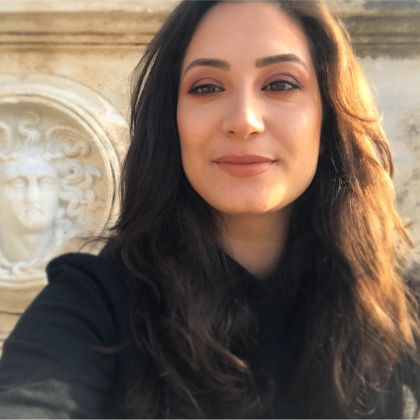
In many parts of West Asia and North Africa (WANA, sometimes refered to as MENA)*, independent journalism operates within complex economic and social realities. Building and sustaining a media platform or organisation in this landscape requires more than editorial strength; it demands strategic clarity, collaborative networks, and long-term vision. It is within this evolving ecosystem that leaders like Valentine Nesser are emerging.
Valentine Nesser, Executive Director of Silat Wassel – صلة وصل – and an alumna of RNW Media's RNTC Media Training Centre, represents a generation of media-makers and leaders who are moving beyond content production to building sustainable media ecosystems.
From Strategy to Organisational Vision
In 2023, Valentine participated in RNTC’s signature training Media Campaigns for Social Change and Advocacy. The course equips media professionals with the tools to design and implement structured advocacy campaigns to drive public discourse and policy action on diverse social issues. Participants learn to define clear objectives, identify target audiences, map stakeholders and power dynamics, develop persuasive messaging, and select effective digital and offline tactics, while applying monitoring and evaluation tools to measure campaign impact.
For Valentine, the training deepened her professional toolkit and, importantly, provided a structured way to think about influencing narratives, decision-making processes and long-term societal outcomes.
Within a regional cohort of media professionals from Lebanon, Egypt, Jordan and beyond, she worked on developing concrete campaign concepts grounded in her own context. Through structured exercises, peer feedback and tools such as stakeholder mapping and theory-of-change frameworks, journalism was examined not only as storytelling but as a lever for strategic engagement. Participants were encouraged to move beyond raising awareness to shaping conversations and influencing decision-making processes. This shift in perspective, from reporting on issues to designing interventions around them, proved formative.
It was during this period that the idea for Silat Wassel – صلة وصل – began to crystallise.
Reflecting on that turning point, Valentine explains:
The Media Campaigns for Social Change and Advocacy training helped me see journalism not only as a tool for reporting, but as a form of collective leadership. It shifted my thinking from focusing on individual stories to building long-term narratives that empower communities and create space for participation, not just visibility. This shift deeply shaped how I lead Silat Wassel today, by prioritising shared decision-making, ethical responsibility, and journalism that listens as much as it speaks.
Building a Platform with Strategic Intent
Silat Wassel is a women-led independent digital media platform focusing on South Lebanon and the wider WANA region, engaging a young and digitally active audience across the Arab world. The platform creates space for younger audiences whose perspectives are often absent from mainstream media, while amplifying issues that remain underrepresented, including women’s rights, minorities, LGBTQ+ communities, environmental and climate concerns, corruption, public affairs, and freedom of belief and expression.
The peer-learning environment of the RNTC training proved instrumental in shaping the platform’s collaborative foundation. Working closely with media professionals from across the region fostered trust, critical exchange and a shared strategic language around advocacy and impact. Several journalists from that same cohort later contributed to the establishment and development of Silat Wassel, translating classroom collaboration into cross-border partnership.
Earlier this year, Silat Wassel was officially registered as a for-profit company in Lebanon. The team has grown from four to six staff members and collaborates with over 20 freelance journalists across the region.
In recent months, the platform has begun applying the campaign-based frameworks developed during the training to its own regional initiatives. Most notably, Silat Wassel launched the Regional Fellowship for Unheard Voices, bringing together participants from Lebanon, Syria, Iraq, Jordan and Egypt. The initiative produced eight in-depth reports alongside a coordinated social media campaign focused on marginalised communities and sensitive issues often overlooked in mainstream coverage.
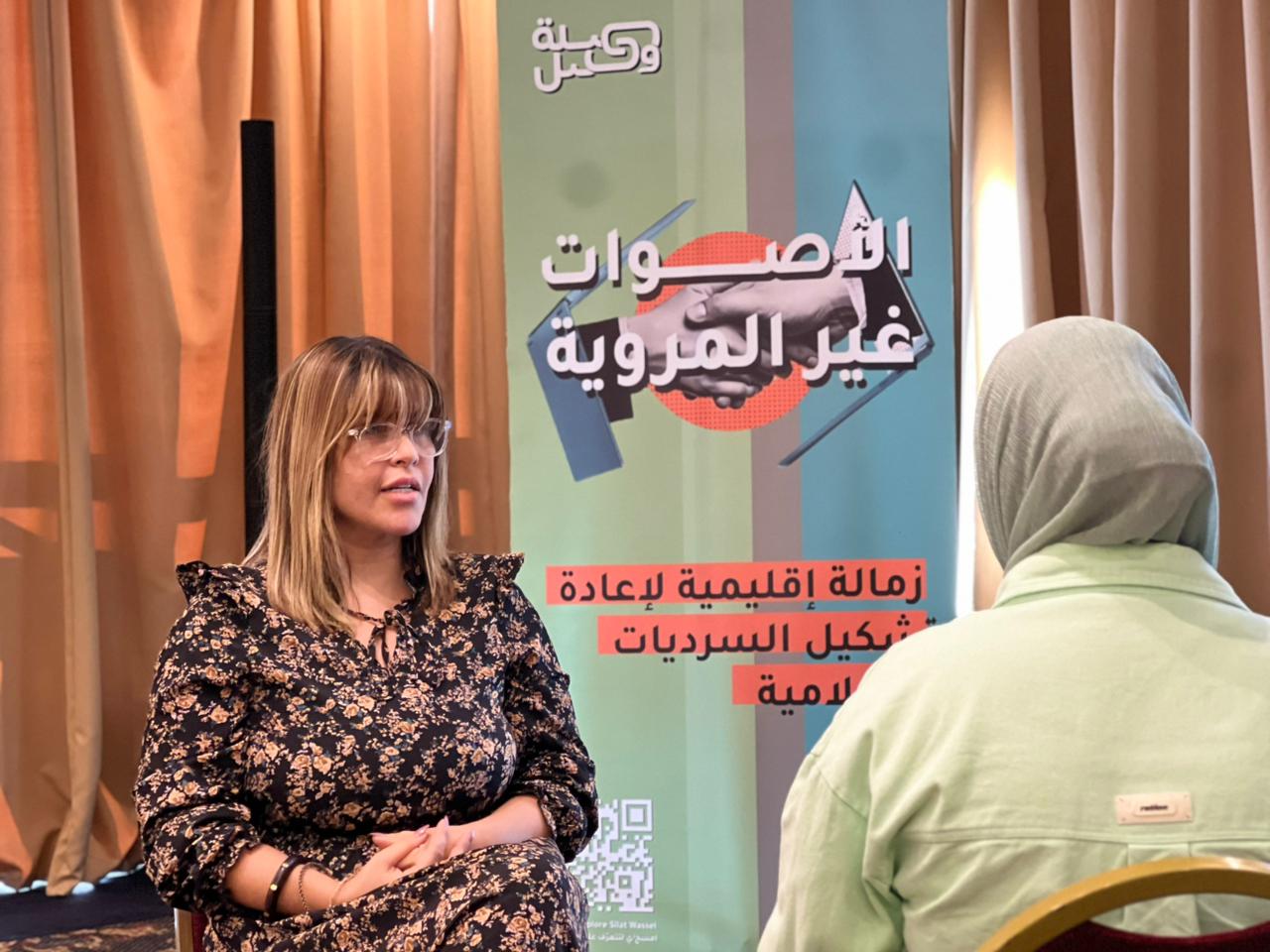
Leadership in a Changing Media Landscape
Leading a digital media platform as a woman in a traditionally male-dominated environment presents distinct challenges. Valentine regularly encounters social stereotypes and online harassment. Yet she remains focused on strengthening the platform and expanding its reach.
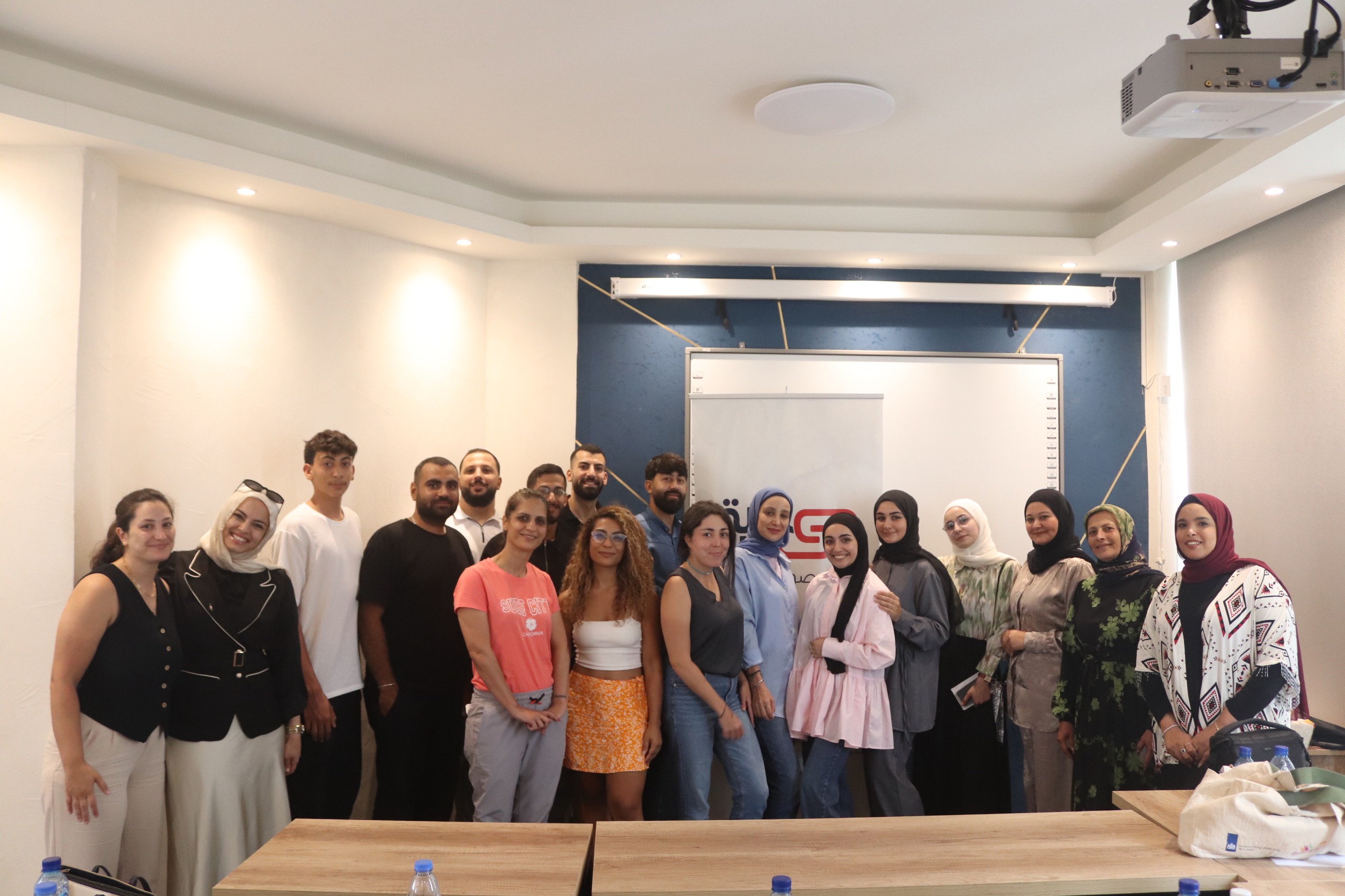
On International Women’s Day, Valentine’s journey underscores an important dimension of gender equity in media: leadership! Advancing women’s participation in journalism is not limited to newsroom inclusion. It also involves enabling women to design strategies, establish organisations and shape media ecosystems.
Valentine is clear that her work does not end with building her own media platform.
I want to give back by sharing my experience through local trainings that help more women become leaders in their communities. We have worked with many talented women who have strong ideas, but they need greater support, both in training and funding, to launch their own initiatives.
Her ambition reflects a multiplier effect. Leadership, in this sense, is not individual recognition but collective advancement. It is about creating space for others to lead, build, and shape their communities.
Note: We use "West Asia and North Africa (WANA)" instead of "Middle East and North Africa (MENA)" to promote a more geographically accurate and decolonised understanding of the region's identity. This shift aims to challenge and move away from Eurocentric perspectives in our terminology.